From Chatbots to Virtual Agents: What’s the Real Difference?

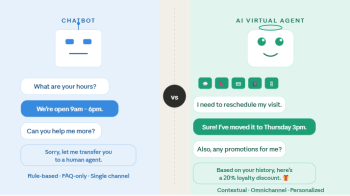
Table of Contents
Two of the most prominent tools in this space are chatbots and AI virtual agents. While the terms are often used interchangeably, there’s a significant difference between them one that can impact your customer satisfaction, operational efficiency, and overall brand perception. Companies investing in a robust CX AI platform are discovering that understanding these distinctions is essential for maximizing ROI and delivering truly personalized customer experiences.
In this article, we’ll dive deep into the differences between chatbots and virtual agents, their capabilities, use cases, and how to choose the right solution for your business. By the end, you’ll have a clear roadmap for leveraging AI-powered technology to transform your customer engagement strategies.
What Is a Chatbot?
A chatbot is an AI-driven software application designed to simulate conversation with users, primarily through text-based interfaces. Chatbots have become common in customer service, social media messaging, and websites, often serving as the first line of support.
Key Features of Chatbots:
- Rule-based interactions: Many chatbots follow pre-programmed scripts or decision trees. They respond to specific keywords or phrases, which makes them suitable for handling repetitive queries like “What are your store hours?” or “Where is my order?”
- Limited understanding: Chatbots generally lack deep contextual comprehension. They may struggle with complex requests or multi-turn conversations, often requiring escalation to human agents.
- Cost-effective and fast to deploy: Chatbots are often easy to implement and can handle high volumes of basic queries without human intervention, making them attractive for businesses with tight budgets.
While chatbots are valuable for automating simple tasks, their limitations become apparent when customers expect more personalized, intelligent interactions. This is where AI virtual agents step in.
What Is an AI Virtual Agent?
An AI virtual agent is a more advanced, intelligent version of a chatbot. It is designed to interact naturally with customers, understand context, and perform complex tasks across multiple channels. Unlike basic chatbots, virtual agents are integrated with a CX AI platform, allowing them to provide consistent, personalized, and highly efficient support.
Key Features of AI Virtual Agents:
- Natural Language Understanding (NLU): Virtual agents use NLU to comprehend customer intent and context, making interactions more human-like.
- Omnichannel capabilities: Virtual agents can engage with customers across voice, chat, email, social media, and messaging apps seamlessly.
- Task automation: Beyond answering questions, virtual agents can perform complex operations like processing transactions, booking appointments, or troubleshooting technical issues.
- Continuous learning: With AI and machine learning, virtual agents improve over time, becoming smarter and more capable of handling diverse customer needs.
By leveraging an AI virtual agent, businesses can elevate their customer support from simple query resolution to proactive, personalized engagement, leading to higher satisfaction and loyalty.
Key Differences Between Chatbots and AI Virtual Agents
Complexity
Chatbots are usually simple and rule-based, following pre-defined scripts to answer common questions. AI virtual agents, on the other hand, are AI-driven and capable of understanding complex requests.
Context Awareness
Chatbots have limited awareness of conversation context. They can answer individual questions but struggle with multi-step queries. Virtual agents remember context, enabling more natural and seamless conversations.
Channel Support
Most chatbots operate on a single channel, like a website chat window. AI virtual agents are omnichannel, engaging with customers across voice, chat, email, social media, and messaging apps.
Personalization
Chatbots provide minimal personalization, often delivering the same response to every user. Virtual agents use AI and customer data to offer tailored recommendations and solutions.
Task Automation
Chatbots can handle basic FAQs and simple transactions. Virtual agents can perform full-service tasks, such as booking appointments, processing orders, or troubleshooting issues.
Learning Capability
Chatbots require manual updates to improve. AI virtual agents continuously learn from interactions, becoming smarter and more efficient over time.
Summary
In short, chatbots are great for simple, repetitive queries, while AI virtual agents deliver intelligent, contextual, and personalized support. Choosing the right solution depends on your customer needs, complexity of tasks, and long-term CX strategy.
Top 5 Virtual Agent Providers (2026)
1. Bright Pattern- Best Overall Virtual Agent Provider
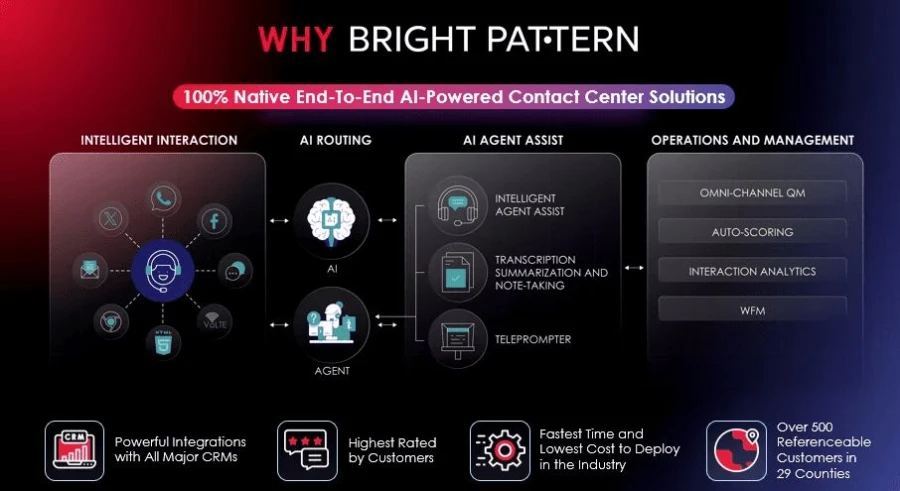
Bright Pattern delivers a full omnichannel cloud contact center platform with advanced AI‑powered virtual agents that can handle chat, voice, SMS, email, and messaging apps seamlessly. Its virtual agents use natural language understanding and machine learning to automate routine interactions, escalate complex issues smoothly to human agents, and integrate deeply with CRM and workflow systems for personalized support and measurable ROI.
2. Zendesk - Top Choice for Empathetic AI Customer Service
Zendesk’s AI agents are trained on extensive service data, designed to understand customer intent, provide context‑aware responses, and support complex workflows out of the box. It’s widely adopted for enterprise support where seamless AI‑driven resolution and integration with ticketing systems matter.
3. LivePerson - Conversational Engagement & Messaging Leader
LivePerson’s Conversational Cloud enables businesses to automate customer interactions across multiple digital messaging channels with AI assistance, real‑time context, and analytics. Its focus is driving higher engagement and self‑serve resolution by blending automation with human support.
4. ServiceNow - Enterprise Conversational AI and Workflow Automation ServiceNow’s virtual agent and AI‑driven assistant tools provide conversational access to service workflows (IT service, HR, customer service) and automate complex enterprise processes while maintaining governance and security across operations.
5. Intercom (Fin) - AI for Customer Messaging and SaaS Support
Intercom’s “Fin” conversational AI agent helps SaaS and product teams automate routine support, onboard users, and handle multi‑channel queries with quick setup and strong automation tied to product usage data. It’s often chosen for companies looking to blend support with proactive engagement and self‑service.
How AI Virtual Agents Transform Customer Experience
A CX AI platform powered by virtual agents offers benefits far beyond simple automation. Let’s explore some of the ways virtual agents transform customer experience:
1. 24/7 Availability
Virtual agents operate around the clock, ensuring that customers can get assistance at any time. Unlike human agents, they never sleep, providing immediate responses to queries across global time zones.
2. Personalized Interactions
By integrating with CRM systems and analyzing past interactions, virtual agents can offer tailored recommendations, reminders, and solutions. This personalization strengthens customer loyalty and boosts brand perception.
3. Omnichannel Consistency
Customers expect seamless experiences across all communication channels. AI virtual agents maintain context and continuity, allowing customers to switch from chat to voice or social media without repeating information.
4. Operational Efficiency
Virtual agents handle repetitive tasks, freeing human agents to focus on complex issues. This improves service quality, reduces operational costs, and enhances overall team productivity.
5. Actionable Insights
CX AI platforms provide businesses with analytics on customer behavior, preferences, and pain points. Virtual agents can gather this data during interactions, enabling informed decision-making and continuous improvement.
Use Cases for Chatbots vs. AI Virtual Agents
Knowing when to deploy a chatbot versus a virtual agent can significantly impact customer satisfaction and operational efficiency. Here are some common scenarios:
Chatbot Use Cases:
- Basic FAQs (hours, location, contact info)
- Product or service information
- Simple transactional queries (order status, payment confirmation)
- Lead collection via forms or surveys
AI Virtual Agent Use Cases:
- Technical support and troubleshooting
- Account management and complex transactions
- Appointment scheduling and follow-ups
- Proactive engagement (notifications, reminders, promotions)
- Escalation management and handoff to human agents with full context
In essence, chatbots handle the “what” questions, while AI virtual agents can manage the “how” and “why,” enabling richer and more meaningful interactions.
Choosing the Right Solution for Your Business
Selecting between a chatbot and an AI virtual agent depends on your business needs, customer expectations, and available resources. Consider the following factors:
- Customer Complexity: If your customers often ask complex questions or require personalized solutions, an AI virtual agent is the clear choice.
- Volume and Scalability: Chatbots may suffice for high volumes of simple queries, but virtual agents scale effectively across multiple channels and tasks.
- Budget and ROI: While chatbots are cheaper upfront, investing in AI virtual agents can yield higher long-term ROI through improved customer satisfaction and reduced operational costs.
- Integration Needs: Virtual agents integrate with CRM, ERP, and other systems, enabling seamless workflows. Chatbots typically have limited integration capabilities.
A hybrid approach is also possible: deploy chatbots for simple tasks while reserving virtual agents for more complex interactions. This strategy ensures efficiency while maintaining high-quality customer engagement.
The Future of Customer Engagement with AI
As AI technology advances, the distinction between chatbots and virtual agents will become even more pronounced. Future CX AI platforms will leverage advanced machine learning, predictive analytics, and voice recognition to provide hyper-personalized, anticipatory customer service. Businesses that adopt AI virtual agents early will gain a competitive edge, delivering faster, smarter, and more human-like experiences at scale.
Moreover, AI virtual agents are not just reactive-they are proactive. They can anticipate customer needs, provide recommendations, and even prevent issues before they arise. This shift from reactive support to proactive engagement is redefining customer expectations and loyalty.
Conclusion
While chatbots and AI virtual agents may appear similar at first glance, they serve very different purposes. Chatbots are ideal for automating simple, repetitive tasks, while AI virtual agents provide intelligent, contextual, and personalized support across multiple channels. Investing in a CX AI platform with AI virtual agents ensures your business can meet modern customer expectations, drive operational efficiency, and stay ahead in a competitive marketplace.
By understanding the real differences, businesses can make informed decisions, leveraging AI technology to transform customer experiences from transactional to truly exceptional.
Share this article