Why Most B2B Lead Gen Funnels Stall at the Middle - and How to Fix It

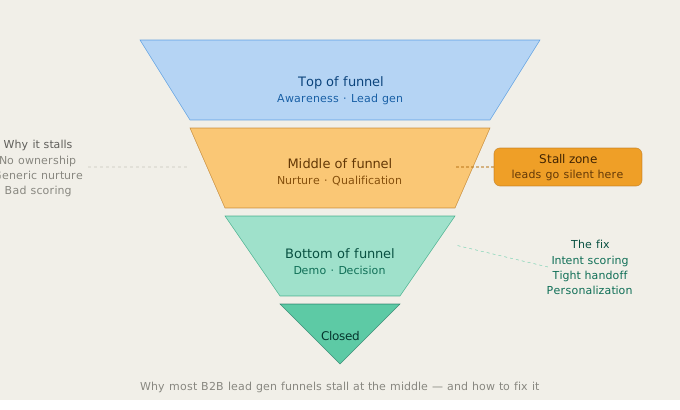
Table of Contents
Getting leads into the top of the funnel is rarely the hard part. Most B2B teams have figured out paid ads, content marketing, or outbound sequences well enough to generate a steady stream of names and email addresses. The real problem shows up a few weeks later, when those leads go quiet - not cold exactly, just stuck.
The middle of the funnel is where deals go to die slowly. Prospects who seemed genuinely interested stop responding, nurture emails get ignored, and sales reps keep chasing contacts who never quite convert. It's frustrating precisely because these leads aren't lost - they're just stalled, somewhere between awareness and decision, with no clear momentum pushing them forward.
Understanding why this happens - and what to do about it - is one of the highest-leverage things a B2B revenue team can work on right now.
The Real Reason MoFu Leads Go Silent
The most common explanation teams reach for is timing. "They're just not ready yet." And sometimes that's true. But more often, the stall happens because the lead was never properly qualified in the first place, or because the handoff between marketing and sales introduced friction that killed the momentum.
Marketing teams are incentivized to generate volume. Sales teams are incentivized to close. Neither is naturally incentivized to own the messy middle - the education, the objection handling, the slow trust-building that converts an interested prospect into a serious buyer. That ownership gap is usually where the funnel breaks.
There's also a content problem. Most nurture sequences are built around the company's product rather than the buyer's actual situation. Generic drip emails about features and case studies don't move people forward - they just fill inboxes. Prospects disengage not because they've decided against you, but because nothing you're sending is relevant enough to earn a response.
Why Lead Scoring Often Makes This Worse
Lead scoring was supposed to solve this. The idea is sound: assign points based on behavior, prioritize high-scorers, have sales follow up at the right moment. In practice, most scoring models are built on assumptions that are years out of date and never revisited.
A prospect who downloads a whitepaper gets 10 points. Someone who visits the pricing page twice gets 15. But those behaviors don't mean the same thing for every buyer. A procurement manager researching vendors looks identical in a scoring model to a junior analyst writing a report. Both hit the same triggers, both land in the same priority queue, and sales ends up spending time on leads that were never going to close.
The better approach is to build scoring around verified intent signals rather than passive engagement. That means factoring in things like company size, role seniority, the specific pages visited, and - where you can access it - third-party intent data showing what topics the account is actively researching across the web. This is also where a lot of teams are starting to experiment with the best AI tools for sales, using machine learning to surface which leads are actually showing buying behavior versus just browsing.
The Handoff Problem Nobody Talks About Enough
Even when a lead is genuinely ready, a clumsy marketing-to-sales handoff can kill the deal. The prospect has been reading your content, attending webinars, engaging with your brand - and then suddenly they get a cold-feeling email from a rep who clearly hasn't read any of the context. It's jarring. It signals that your team isn't coordinated, and it erodes the trust you spent weeks building.
The fix isn't just better CRM hygiene, although that helps. It's designing the handoff as a deliberate experience. The sales rep's first outreach should reference something specific - a piece of content the lead engaged with, a pain point mentioned in a form submission, a conversation from a demo request. It should feel like a continuation of a relationship, not the start of a cold outreach sequence.
Sales and marketing also need a shared definition of what a "ready" lead actually looks like. Not in vague terms like "marketing qualified" or "sales qualified," but in specific, agreed-upon criteria that both teams help define and regularly review. When that definition drifts - and it always drifts without maintenance - the handoff breaks down again.
How to Actually Accelerate Mid-Funnel Momentum
The most effective mid-funnel strategies share one thing: they give prospects a reason to re-engage on their own terms. That usually means offering something genuinely useful at the right moment, rather than nudging them toward a demo they're not ready for.
Interactive content works well here - assessments, ROI calculators, diagnostic tools that help the prospect understand their own situation better. These create engagement because they deliver value immediately, and they give you useful signal about where the buyer actually is in their thinking. A prospect who completes a detailed assessment is much further along than one who downloaded a guide six weeks ago.
Personalized video outreach has also become a reliable way to break through at this stage. A short, specific video from a sales rep - referencing the prospect's company, their industry, a specific challenge - converts significantly better than another templated email. It's harder to scale, but it doesn't need to be used on every lead. Reserve it for the accounts that matter most and deploy it at the right moment.
Timing also matters more than most teams acknowledge. Research consistently shows that response rates and conversion rates are highest when follow-up happens within minutes of a high-intent action - like a pricing page visit or a demo request. Most teams are following up hours or days later, which is long after the moment of peak interest has passed. Automating the trigger for that first touchpoint, while keeping the message itself personal, is one of the fastest ways to improve mid-funnel conversion.
Measuring the Right Things in the Middle
One reason mid-funnel problems persist is that they're hard to see in standard reporting. Most dashboards are built around top-of-funnel volume and bottom-of-funnel revenue - leads generated, opportunities created, deals closed. The middle gets measured in vague engagement metrics that don't tell you much about actual progress.
Better mid-funnel measurement means tracking stage velocity - how long leads are spending at each stage before moving forward or dropping off. It means looking at which nurture touchpoints actually correlate with conversion, not just which ones get clicked. And it means having honest conversations about churn within the funnel: what percentage of MQLs are being disqualified after handoff, and why.
When you can see where momentum is consistently breaking down, you can build targeted interventions rather than applying generic fixes across the whole funnel. That specificity is what separates teams that improve their mid-funnel performance from those that just keep generating more leads and hoping the math eventually works out.
The Fix Is Structural, Not Tactical
Most teams approach mid-funnel stalls by adding more - more touchpoints, more content, more follow-up sequences. Occasionally that works, but it usually just adds noise to a system that's already broken. The real fix is structural: aligning incentives between marketing and sales, tightening the definition of a qualified lead, designing the handoff as a deliberate experience, and building measurement that actually reflects what's happening in the middle.
None of this is quick, but the compounding effect is significant. A funnel that converts 5% better at the mid-stage doesn't just produce more revenue - it makes every dollar spent at the top of the funnel more valuable. That's the leverage point most B2B teams are sitting on without realizing it.
Share this article