
How Domain Name Age Impacts Search Visibility

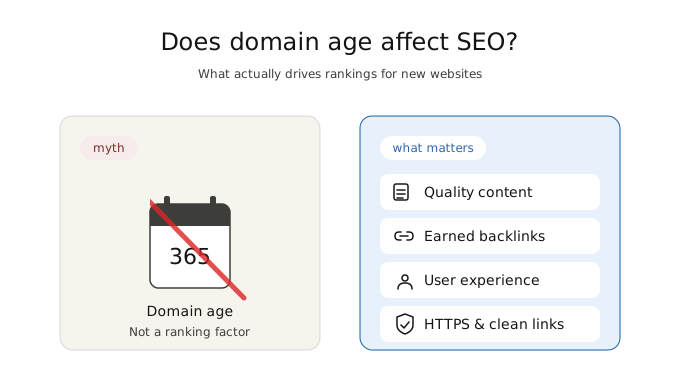
Table of Contents
Many website owners silently worry about a common question before launching their site: does registering a brand-new domain put you at a massive disadvantage against established competitors? It is easy to look at the top search results, see sites that have been around for a decade, and assume that search engines heavily favor older web addresses. This common belief leads many beginners to overthink their launch strategy or spend thousands of dollars buying an older, pre-registered web address.
Let's separate the myth from reality. While older websites often rank well, the calendar date of their registration is not the actual reason why. Search algorithms have evolved significantly, and they prioritize what you actually do with your website over how long you have owned the name. When you use a domain name generator to come up with ideas, you make one of the most strategic moves possible for a new site owner. A strong, relevant name sets a solid foundation for everything you build next.
TL;DR
- Domain age does not significantly impact SEO; search engines prioritize content quality and user experience over how long a domain has been registered.
- Building trust with your new domain hinges on consistent content creation, earning quality backlinks, and ensuring a great user experience.
- Registering your domain and publishing 5-10 well-structured pages right away helps accelerate your site's authority and visibility.
- It's crucial to choose a memorable, relevant domain name that aligns with your niche to enhance SEO from day one.
- Older sites rank well due to accumulated content, backlinks, and user trust, not merely their age.
What "Domain Age" Actually Means and What It Doesn't
To understand this topic, we first need to define what we are actually talking about. In technical terms, domain age is simply the length of time since a domain was first registered with an official registrar. It's not the date when the site was first indexed by search engines. It's also not the date when the first piece of content was published. It is literally just a timestamp of purchase.
Google’s own representatives have consistently downplayed domain age as a direct ranking factor. They have stated clearly that the difference between a domain that is six months old and one that is a year old is completely insignificant. Search engines don't use a simple "older is better" scoring system. They want to serve the most helpful, relevant and optimized content to their users, regardless of when the author bought the web address.
This distinction matters deeply when you are picking a name for your business. Instead of stressing about finding an older address to buy, you can focus your energy on finding the perfect fit. You can confidently use Wix to brainstorm fresh domain name ideas that perfectly match your brand's voice and mission. Focus less on the age of the URL and more on what you plan to build on that domain from day one.
The Real Reason Older Domains Sometimes Rank Better
If search engines don't care about the registration date, why do older websites seem to dominate the search results? The answer comes down to correlation, not causation. Older domains simply have had a massive head start. They have enjoyed years of runway to build the things that algorithms actually reward.
Think about a website that has been active for eight years. Over that time, the owners have likely published hundreds of articles. They have earned backlinks from major publications. They have built a loyal audience that searches for their brand name directly. They have established a long, credible search history. These compounding factors build an incredible amount of authority over time.
Search engines reward the massive amount of trust that site has accumulated, not the timestamp of its registration. This is fantastic news for new site owners. It gives you a clear, actionable path to compete. You don't need a time machine to rank well. You just need to systematically build the same trust signals that the older sites have, and you can start doing that on your very first day.
Trust Signals Search Engines Actually Care About
If age does not matter, what should you focus on? You need to shift your attention to the concrete signals that build real search credibility. These are the factors that prove to search engines that your site is a reliable resource for users.
- Consistent content publishing: Search engines love active websites. When you regularly publish helpful, well-researched content, you show that your site is alive and relevant. A new domain with twenty highly accurate, updated articles will easily beat an older domain with outdated, thin content.
- Quality backlinks: When other reputable websites link to your pages, they pass along their authority. Think of a backlink as a vote of confidence. Earning links from relevant sites in your industry tells search engines that your content is trustworthy and valuable.
- User experience and low bounce rates: If visitors land on your site and immediately leave, it tells search engines your page did not answer their question. A fast-loading, easy-to-navigate website keeps people reading longer.
- Security and clean link profiles: Running your site on HTTPS is an absolute must for security. Furthermore, a clean link profile—meaning you have not bought spammy backlinks to trick the system—proves you are playing by the rules. A new domain that methodically earns these signals will absolutely outrank an older domain that has been neglected or mismanaged.
How to Research a Domain Name That Works for SEO From Day One
Your domain choice is the foundation of your long-term SEO performance. Taking a practical, keyword-aware approach to choosing your name will serve you far better than worrying about age. You want a name that reflects your niche clearly to both users and search engines.
Start by keeping your name short and memorable. If people have to ask how to spell your web address, you will lose direct traffic. Avoid hyphens and numbers completely. They look messy, are hard to say out loud, and often get associated with spammy, low-quality websites. Stick to letters, and aim for clarity.
Check whether strong exact-match or partial-match keywords belong in the name. If you run a bakery in Boston, including "Boston" and "Bakery" in your name provides immediate context. Use keyword research tools to validate search demand before committing. However, do not force keywords if they make the brand sound unnatural. A memorable, brandable name always wins over a robotic string of search terms.
Giving a New Domain the Best Possible Start
You have registered your brand-new domain. Now, what do you do to build authority quickly? Your actions in the first 90 days dictate how fast search engines will begin to trust you. You can completely replace the myth that you need to "wait out" domain age with a proactive launch checklist.
First, submit your new domain toGoogle Search Console. This tells Google that you exist and provides them with a sitemap so they can crawl your pages efficiently. Do not wait for them to find you organically. Hand them the map directly.
Next, publish a minimum of five to ten well-structured pages immediately. Give search engines enough context to understand what your entire website is about. A single "coming soon" page does nothing for your SEO. You need core pages, about pages, and comprehensive blog posts ready to read.
Finally, start building early links through legitimate directories and guest posts. Claim your social media profiles and link them back to your website. Set up proper technical SEO basics, like clean URL structures and optimized meta tags. By taking these steps, you actively build authority instead of passively waiting for a clock to tick.
Main Points to Keep in Mind
Domain age is simply a side effect of time passing, not a deliberate SEO strategy. The date you registered your web address will not make or break your business. What truly matters is everything that happens on and around the domain from the exact moment you launch.
Search engines want to recommend the best possible answers to their users. If you provide those answers clearly, quickly, and securely, you will earn your spot at the top of the results. Stop waiting for the perfect moment or stressing about the age of your URL. Start building your website today, focus on delivering massive value to your readers, and remember that every massive, established domain you see on page one was once brand new.
FAQ
Does an expired domain retain its SEO value?
An expired domain can retain some of its historical backlinks, but it is not a guaranteed SEO shortcut. If the domain was previously used for spam or penalized by Google, buying it could actually hurt your efforts. Search engines often reset the value of an expired domain when it changes ownership to prevent manipulation.
Should I buy an older domain instead of a new one?
Buying an older domain is only beneficial if it comes with a strong, clean backlink profile highly relevant to your specific niche. For most beginners, it is much safer and more cost-effective to register a brand-new domain. This allows you to build a custom brand identity without worrying about inheriting someone else's past SEO mistakes.
How long does it take for a new domain to rank?
It typically takes three to six months of consistent effort before a new domain starts seeing significant organic search traffic. This period involves search engines crawling your site, analyzing your content, and observing how users interact with your pages. Consistent publishing and link building will speed up this timeline.
Does domain registration length affect SEO?
Registering your domain for five years instead of one year does not provide a direct ranking boost. While some older SEO theories suggested that long-term registrations signaled legitimacy to Google, this has been largely debunked. Focus your budget on creating excellent content rather than prepaying for a decade of registration.
Share this article


